Benchmark indices Sensex and Nifty closed down by half a per cent on Friday following losses in IT and banking shares amid overall weak global market trends. The BSE Sensex declined 316.94 points or 0.52 per cent to settle at 61,002.57. During the day, it fell 508.84 points or 0.82 per cent to 60,810.67.

'Earnings will be the catalyst for markets to march higher from here on out.'

PIO finds similarities between WannaCry code and other tools created by Lazarus Group in the past.

Among the Sensex stocks, Larsen & Toubro rose the most by 3.96 per cent after the company announced a major project win in the Middle East. HDFC, HDFC Bank, Sun Pharma, ITC, HUL, Titan, TCS, HCL Tech, Asian Paints, Bajaj Finance, Infosys and Tata Steel were among the major gainers.

Notwithstanding concerns about lofty valuations, smallcaps recorded their most significant monthly gain in nearly three years in November. The National Stock Exchange Nifty Smallcap 100 finished the month with a 12 per cent gain, the most since February 2021 when it rose by 12.2 per cent. After declining by 4.1 per cent in the preceding month, the Nifty Midcap 100 rose by 10.4 per cent, the most since July 2022.

Ajay Banga will be a 'transformative leader', who will bring expertise, experience, and innovation to the position of World Bank President, United States President Joe Biden has said after the top Indian-American business executive was confirmed as the new head of the international lender.

In India, it is not easy to fight it out with the large banks which are nimble-footed and technology-savvy and are continuously innovating on the retail turf with newer products for customer acquisition.

'With China falling out of favour, India is where investors see the demographic and digital dividend apart from the benefits of reforms playing out.' 'Your prime minister has also done a great job of sharing this story with the world.'

'Given the emerging trends, it may be time for India to embrace digital banking,' notes Pradipta Bagchi.

Funds parked by Indian individuals and firms in Swiss banks, including through India-based branches and other financial institutions, jumped to 2.55 billion Swiss francs (over Rs 20,700 crore) in 2020 on a sharp surge in holdings via securities and similar instruments, though customer deposits fell, annual data from Switzerland's central bank showed on Thursday. The increase in aggregate funds of Indian clients with Swiss banks, from 899 million Swiss francs (Rs 6,625 crore) at the end of 2019, reverses a two-year declining trend and has taken the figure to the highest level in 13 years. It stood at a record high of nearly 6.5 billion Swiss francs in 2006, after which it has been mostly on a downward path, except for a few years including in 2011, 2013 and 2017, as per the Swiss National Bank (SNB) data.

Kotak Bank was the biggest loser in the Sensex pack, falling 3.71 per cent, followed by RIL, HDFC Bank, Bajaj Finance, PowerGrid, IndusInd Bank, Asian Paints, HDFC and ITC.
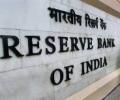
Central banks should be free to decide on monetary and credit policy.

United States President Joe Biden will travel to India from September 7 to 10 to attend the G-20 Leaders' Summit during which he will discuss with other leaders a range of global challenges, including the Ukraine conflict, the White House announced on Tuesday.

JSW Steel (3.37 per cent), Tata Steel (3.33 per cent), Maruti (3.24 per cent), Power Grid (3.07 per cent), IndusInd Bank (2.95 per cent), Bajaj Finance (2.12 per cent) and Tech Mahindra (2.22 per cent) were among major gainers. On the other hand, Ultratech Cement, Sun Pharma, Nestle and L&T were the losers.

ICICI Bank edged past foreign banking majors Citibank and Standard Chartered Bank to emerge as the best retail bank in India, according to the latest issue of 'Asian Banker Journal'.

'The new ceiling will cover around 93 per cent of all deposit accounts, up from 90 per cent earlier,' notes Tamal Bandyopadhyay.
Benchmark indices Sensex and Nifty slid for a seventh straight session on Monday, logging their longest losing run in the past five months, following a bearish trend in global markets amid concerns over aggressive rate hikes by developed economies. Fresh foreign fund outflows and losses in IT, auto and oil stocks also dented investor sentiments. The BSE Sensex declined by 175.58 points or 0.30 per cent to close at 59,288.35 with 17 of its shares posting losses.

Among Sensex stocks, SBI, IndusInd Bank, HDFC Bank, Axis Bank, HDFC, Tech Mahindra, ICICI Bank, Ultratech Cement, L&T, Bajaj Finserv, Reliance, HCL Tech, Asian Paints, Wipro and M&M were the major losers. On the other hand, HUL advanced the most by 1.14 per cent. Maruti, Tata Steel, NTPC and Sun Pharma also posted gains.
Benchmark BSE Sensex rose by 160 points on Thursday in choppy trade following gains in select banking and auto counters amid mixed global cues. The 30-share index gained 160 points to settle at 62,570.68 as 13 of its components advanced while 17 declined. The barometer opened lower but later gained momentum to touch a high of 62,633.56 in the day's trade.

The maximum number of banks are from the US (74), followed by China (29) and South Korea (26).

The Reserve Bank on Wednesday allowed inbound travellers from G20 nations arriving at select airports to use the popular UPI for making payments in the country. Later, the RBI also proposes to extend the Unified Payments Interface (UPI) facility to travellers from all countries. UPI is a system that powers multiple bank accounts into a single mobile application, merging several banking features, seamless fund routing & merchant payments into one hood.

'India is an equity market with a breadth and depth of companies to invest in.'

From the Sensex pack, Reliance Industries fell the most by 2 per cent. Tata Steel, Bajaj Finserv, ITC, NTPC, Bharti Airtel, Tech Mahindra, Titan, Axis Bank and Bajaj Finance were among the other major laggards.

North Korea are banking on team spirit, surprise and sheer determination to upset expectations and get them through to the knockout stages at the World Cup finals in South Africa. Aware his team are being written off as the weakest at the June 11-July 11 tournament, coach Kim Jong-hun is nevertheless backing them to spring a surprise.

From the Sensex pack, Bajaj Finance, Bajaj Finserv, Reliance Industries, Wipro, HDFC Bank, HDFC, ICICI Bank and Tata Steel were the major laggards. ITC was the lone winner in the Sensex pack.

The RBI refuses to classify a cryptocurrency as an asset since it doesn't have future cash flow and its value is always fluctuating because of speculation. There is also no consumer protection, observes Tamal Bandyopadhyay, and hence the e-rupee trial run.

Indian equity markets had a good run in the first half of calendar year 2023 (CY23), with the S&P BSE Sensex and the National Stock Exchange Nifty50 hitting fresh 52-week highs. While the Sensex scaled up to a peak 64,718, the Nifty50 hit Mt 19,189. As the markets now prepare to enter the second half (H2) of CY23, all eyes are on global central banks, especially the US Federal Reserve, as to when they will pause and pivot as regards their interest-rate cycle.

An escalation in the already simmering tensions between North and South Korea, China and Taiwan, and Russia and Ukraine could prove to be a bigger worry for the markets over the next few months rather than central bank policy action, said analysts. The markets, they said, are still not fully factoring in this possibility. "The conflict between Iran and Saudi Arabia is another geopolitical worry.
In the Sensex pack, Mahindra & Mahindra, Tata Steel, Tata Motors, Maruti, Larsen & Toubro, HDFC, HDFC Bank, Tech Mahindra and Bharti Airtel were the major laggards. Asian Paints, Bajaj Finserv, Power Grid, Reliance Industries, NTPC and UltraTech Cement were among the gainers.
Major gainers in the Sensex pack were Wipro, Kotak Bank, Infosys, Maruti, Tata Motors, L&T, IndusInd Bank, Hero MotoCorp, M&M, SBI, ONGC, HDFC Bank and HUL, rising up to 3 per cent.

'Indian equity valuations, although not very expensive, are not cheap either.'

From the Sensex firms, Tech Mahindra jumped 5.58 per cent, followed by Nestle, Tata Steel, NTPC, Tata Consultancy Services, Asian Paints, Wipro and Bajaj Finserv. Mahindra & Mahindra, Hindustan Unilever, Axis Bank and Bajaj Finance were among the major laggards.

Tech Mahindra was the top loser in the Sensex pack, crashing over 9 per cent, followed by Kotak Bank, Axis Bank, TCS, Infosys and HUL. On the other hand, Hero MotoCorp, Bajaj Auto, Bajaj Finance and Titan were the gainers.

From the Sensex pack, Tata Motors, Sun Pharma, Wipro, Tata Consultancy Services, UltraTech Cement, Tech Mahindra, Bajaj Finserv, HCL Technologies, Infosys and IndusInd Bank were the major laggards. NTPC, Power Grid, Reliance Industries, Tata Steel, HDFC and HDFC Bank were the major winners.
The 55 basis point (bps) spike in the US 10-year bond yield, triggered by a combination of FOMC's hawkish commentary and BOJ's relaxation of the yield control curve (YCC) has made analysts cautious on Asian equities and expect them to trade sideways in the short-to-medium term.

This could become tricky territory for India, given its basically adversarial relationship with China, its moves to block imports and investment from that country, and to deny market access for Chinese technologies, observes T N Ninan.

Policies to break down the business group format are far more likely to be effective, argues Simon Commander.

Infosys, Reliance Industries, TCS, HDFC, HDFC Bank, Maruti, SBI, IndusInd Bank and Kotak Bank led the gains on the Sensex, rising up to 2.53 per cent.

The African Union on Saturday joined the G20 after all member countries accepted Prime Minister Narendra Modi's proposal to bring the key bloc of the Global South to the high table of the world's top economies, a major diplomatic achievement of India's presidency.
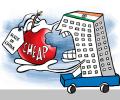
A decline in demand from six of India's top 10 import partners -- China, Saudi Arabia, Iraq, South Korea, Australia, and Singapore -- resulted in India's imports hitting a 17-month low of $50.6 billion in January, showed the data compiled by the department of commerce. Shipments from South Korea, Australia, and Singapore declined by 14.1 per cent, 26.7 per cent, and 9.8 per cent, respectively. Among the 10, growth in inbound shipment was seen only in the case of the United Arab Emirates (12.1 per cent), the US (27.4 per cent), Russia (297.4 per cent), and Indonesia (22.9 per cent).
 © 2026 Rediff.com - Advertise with us - Disclaimer - Privacy Policy - Sitemap - Feedback - About us - Terms of use - Grievances